Optimizing the subscription lifecycle: A data-driven churn mitigation strategy
Project: Hulu Subscriber Retention Engine
The problem: A high-friction, "dark pattern" cancellation flow was causing brand erosion and failing to effectively intercept users with relevant alternatives.
The solution: A hypothesis-driven redesign that replaced trickery with personalized retention logic and clear value propositions.
The result: 17% increase in subscriber retention and a significant lift in "Win-back" re-enrollment rates.
Phase 1: Friction audit
I conducted a comprehensive audit of the legacy flow, identifying three key areas of cognitive overload and negative friction.
1. Irrelevant upsells
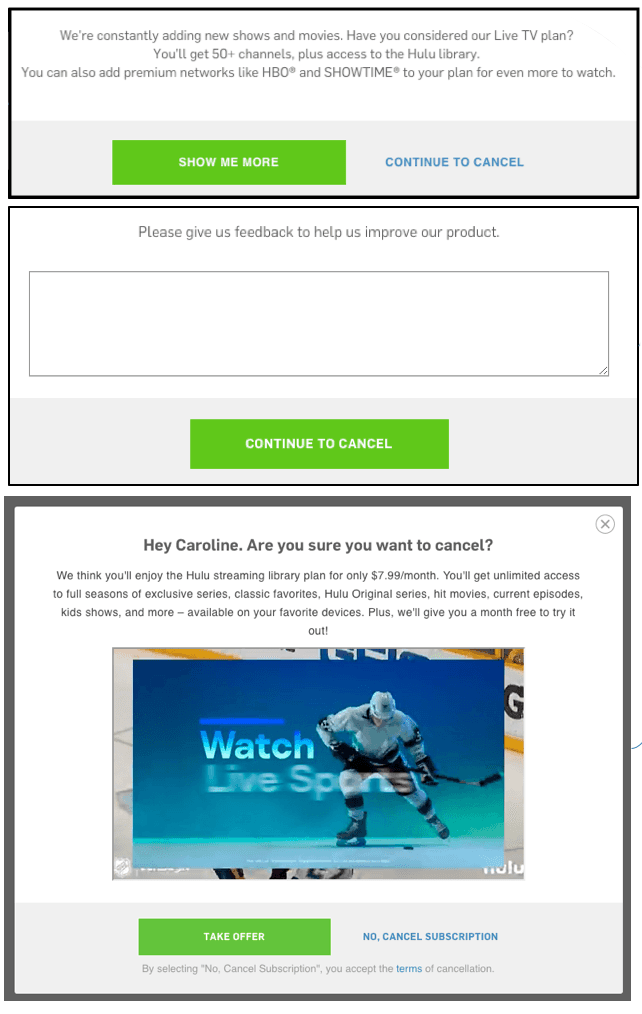
Retention offers were essentially one-size-fits-all, so more expensive tiers and Add-ons were offered to users who cited "Price" as their primary reason for canceling.
2. Forced feedback loop
Long-form qualitative surveys were forced on users, resulting in frustration and criticism on social platforms.
3. Dark patterns
The color and position of the primary CTA was repeatedly switched to deliberately trick the user into exiting the flow, causing frustration, brand distrust, and permanent churn.
Phase 2: Hypothesis-driven design & logic mapping
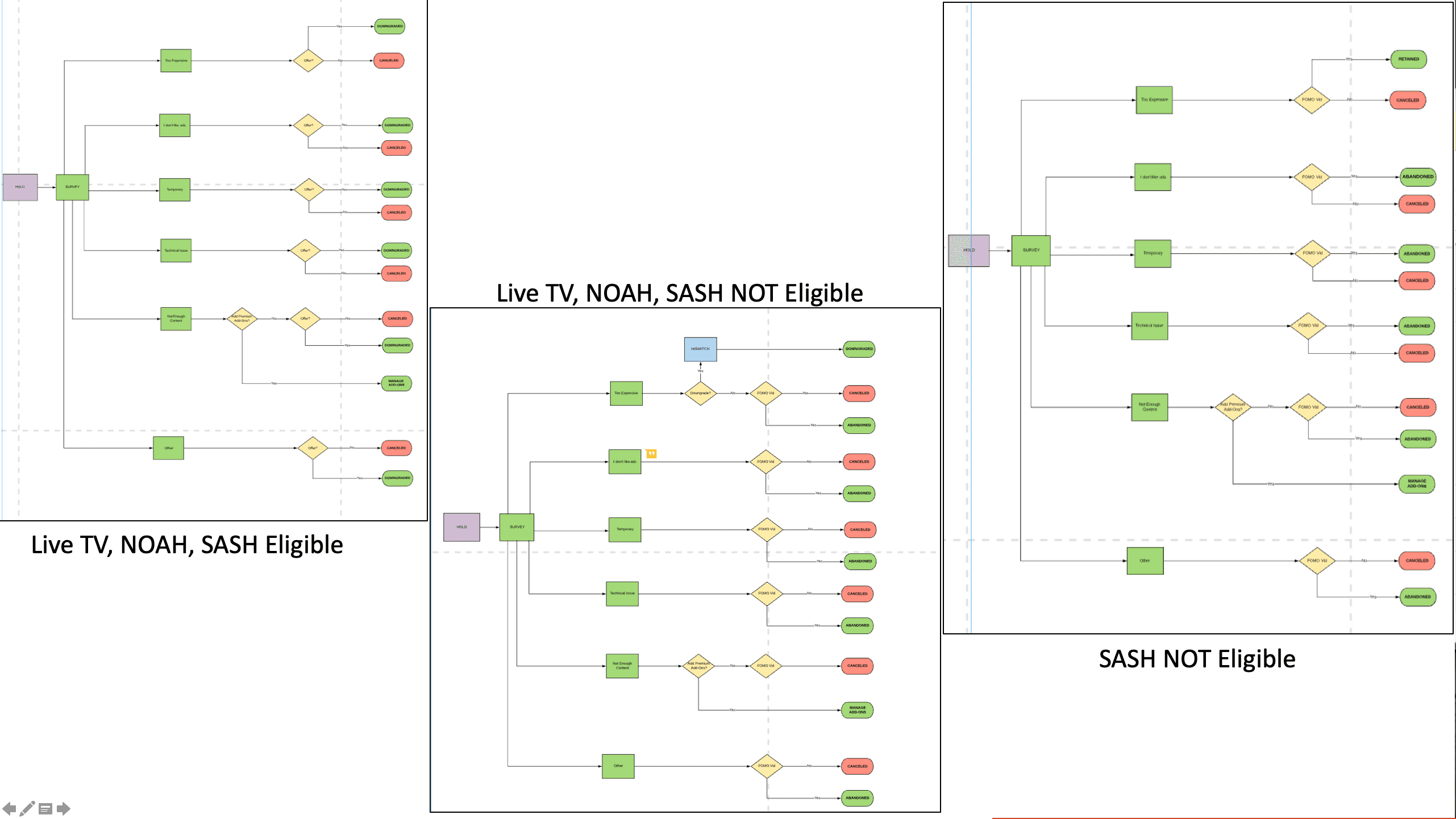
I partnered with Product and Engineering to move away from a linear "one-size-fits-all" exit. We hypothesized that by properly implementing a segmented logic map of "Cancellation Reasons" to "Retention Offers," we could intercept churn more effectively.
Phase 3: Systems thinking & implementation
Instead of just "writing copy," I built a content framework that could scale across Web, Mobile, and Living Room (Hulu only supported cancellation on web at the time, but I wanted to future-proof it in case cross-platform support was ever on the roadmap.)
Framework pillars
Platform brevity
Refined the "Retention Offer" screen to ensure the core value prop was as legible on an iPhone as it was on a TV screen from 10 feet away.
Componentization
Worked with designers to created a modular set of "Retention Cards" in Figma, allowing the Marketing team to swap out seasonal content carousels without requiring a full engineering sprint.
Ethical guardrails
Standardized "Back" and "Cancel" button styles to ensure the user always felt in control, reducing "post-cancellation frustration" and increasing the likelihood of future re-acquisition.
New & improved
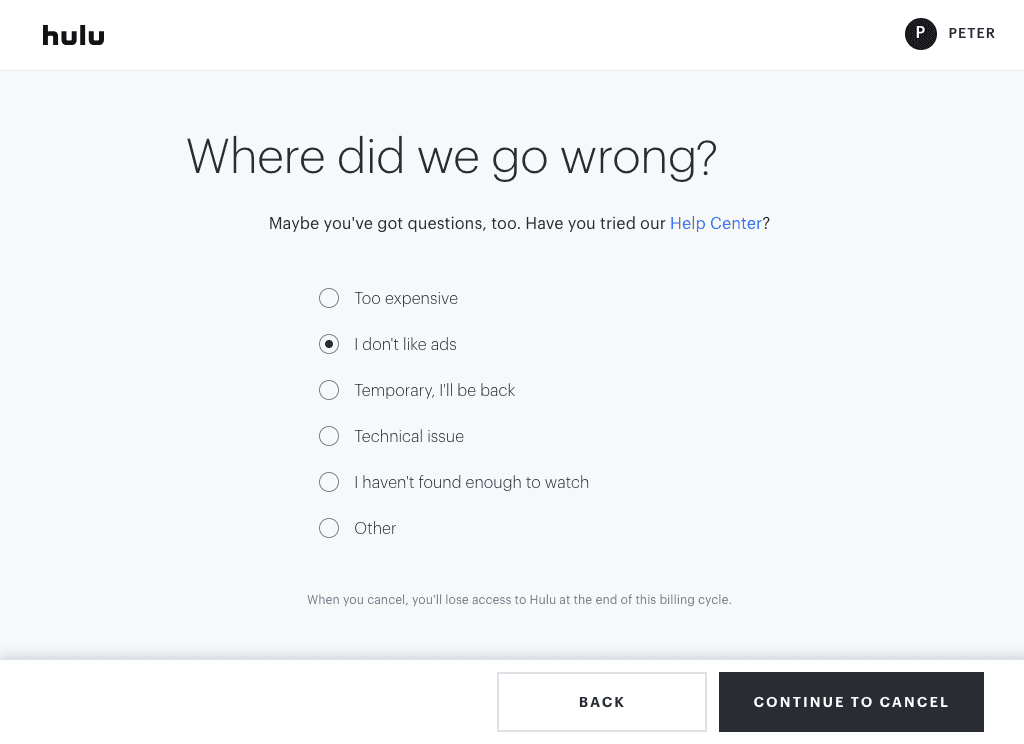
The new flow started with an empathetic pre-cancel survey
The link to the Help Center was also included for those experiencing technical issues.
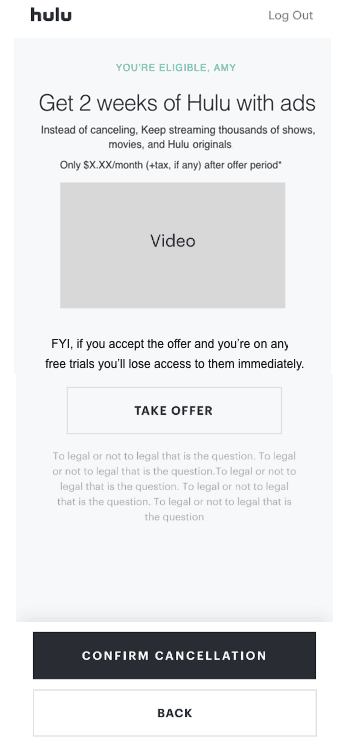
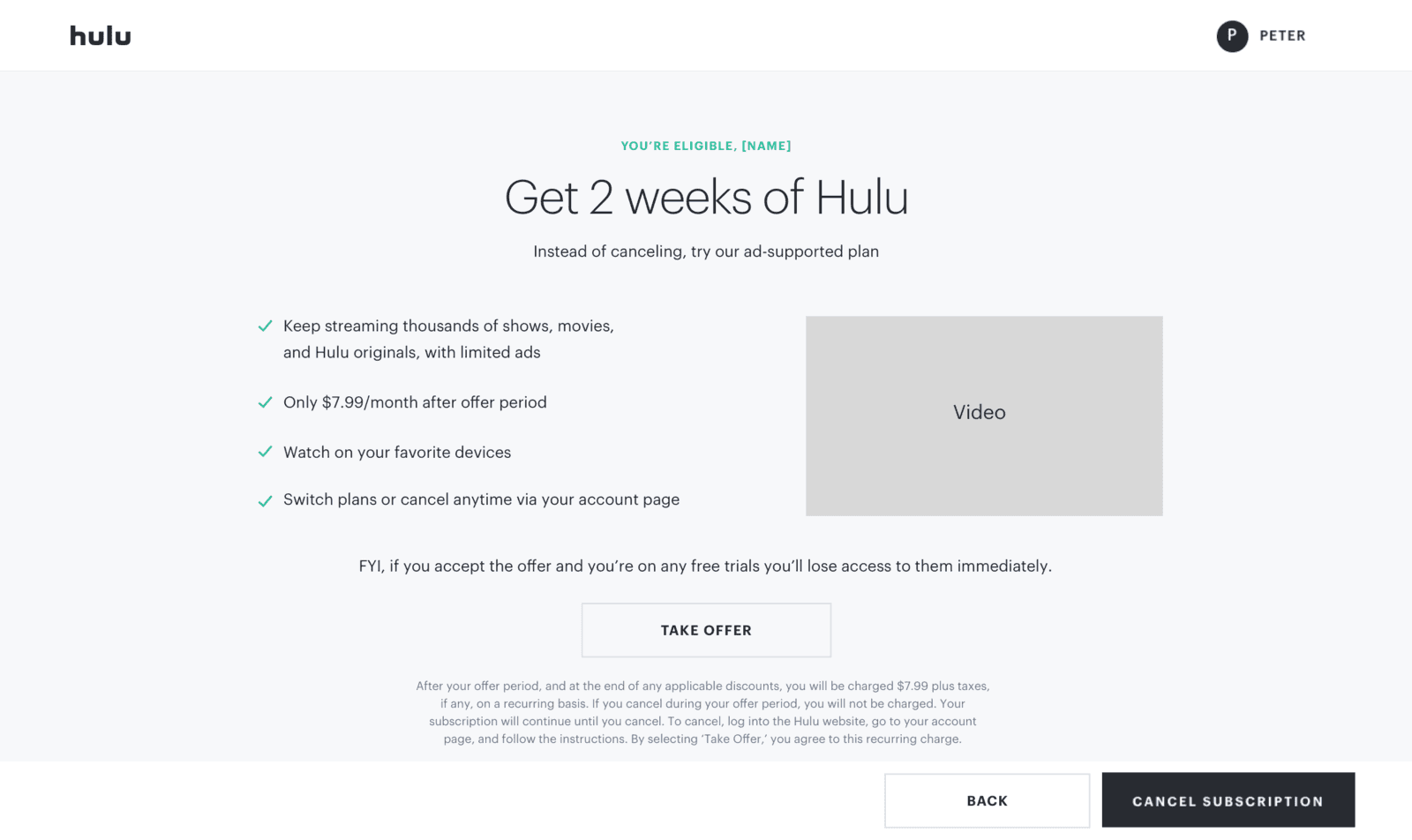
Users were then given a dynamic retention offer based on their survey selection.
Too expensive? Temporary discount or downgrade.
Too many ads? Try an add-free plan.
Not enough variety? Get an Add-on or upgrade to Live TV.
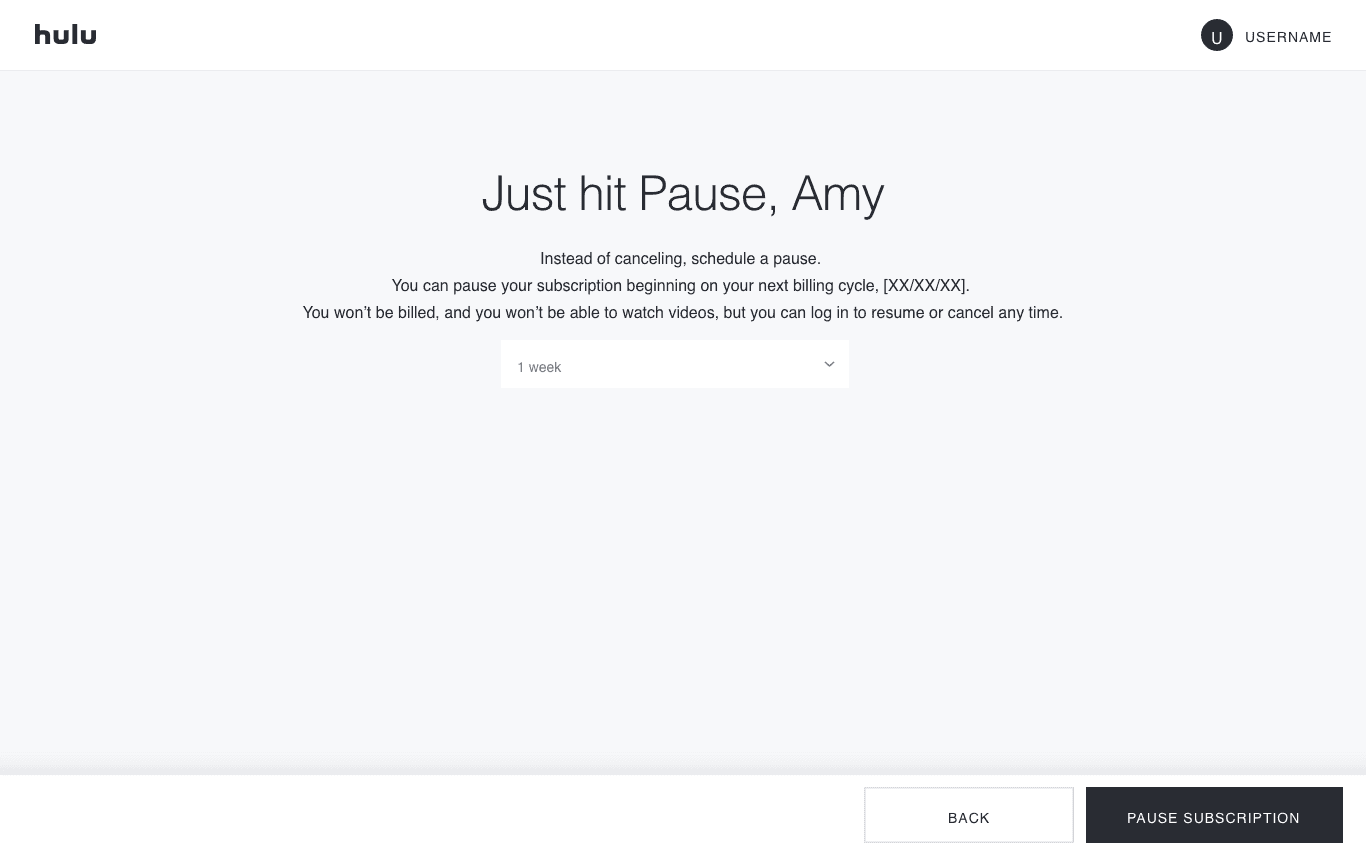
Users who selected Temporary were redirected to an updated
"Pause" flow.
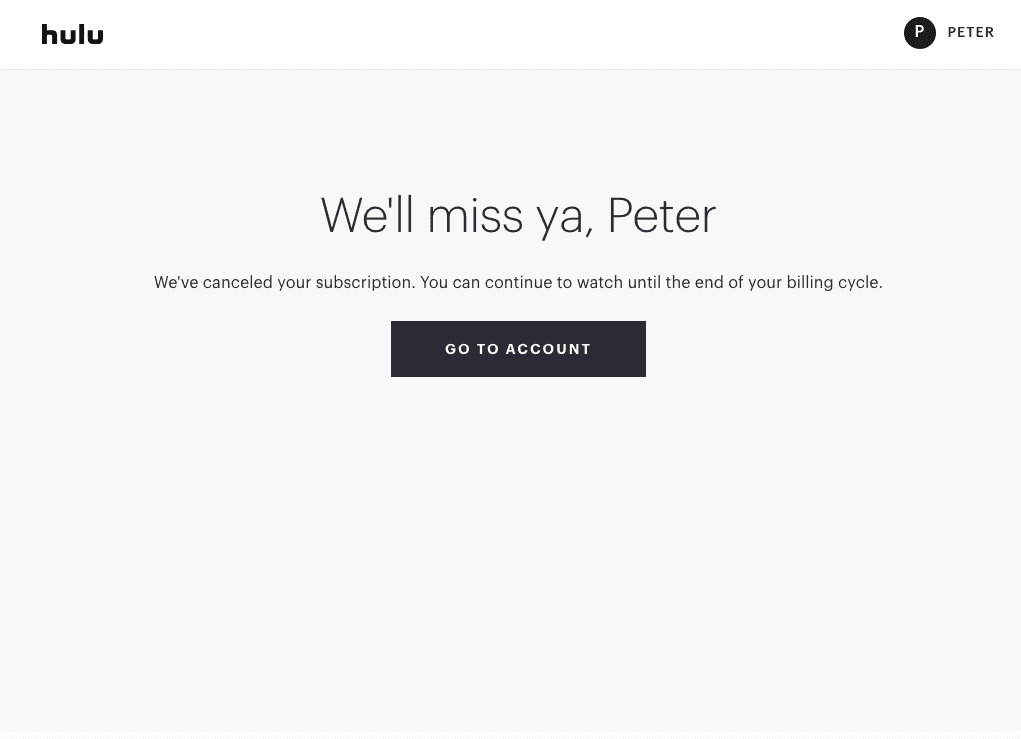
The confirmation screen supported the user's decision without judgement, set clear expectations, and gave them a quick path back to their account settings.
The results: growth through transparency
By replacing dark patterns with personalized narrative design, we validated the hypothesis that transparent, choice-based intercepts outperform high-friction barriers in long-term revenue retention.
17% overall reduction in churn
Validating that users stay when offered a solution, not just a barrier.
22% lift in 'Pause' adoption
Improvements to the Subscription Pause mini-flow resulted in increased user opt-ins among users entering the cancellation funnel.
Higher retention quality
Users who "downgraded" or "paused" showed higher long-term lifetime value than those who were tricked into staying and eventually churned permanently.
Systemic efficiency
Reduced design-to-dev handoff time by using a logic-based content template rather than hard-coded screens.